
How long does hand engraving take?
What you need to know if you’re planning engraving for your event
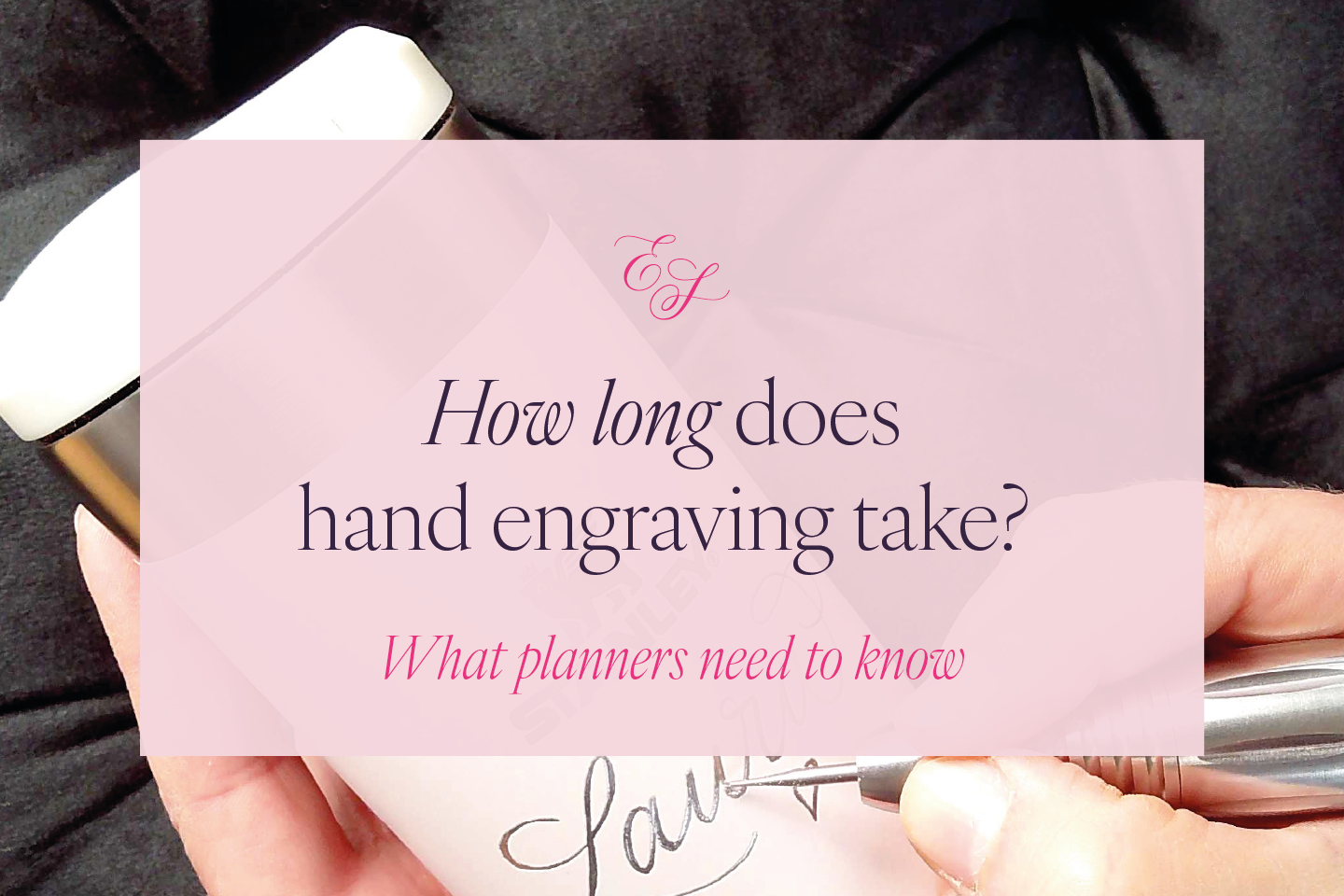
If you’re planning a brand activation, press event, or retail experience, hand engraving is one of those rare additions that genuinely stops people in their tracks.
It’s personal, tactile, and — perhaps most importantly — it happens live, right in front of your guests.
One of the first questions PR and marketing teams ask me is:
“How long does hand engraving take?” or “How many can you engrave in an hour?”
It’s a simple question, but the answer depends on far more than just the engraving itself.
So, how long does it really take?
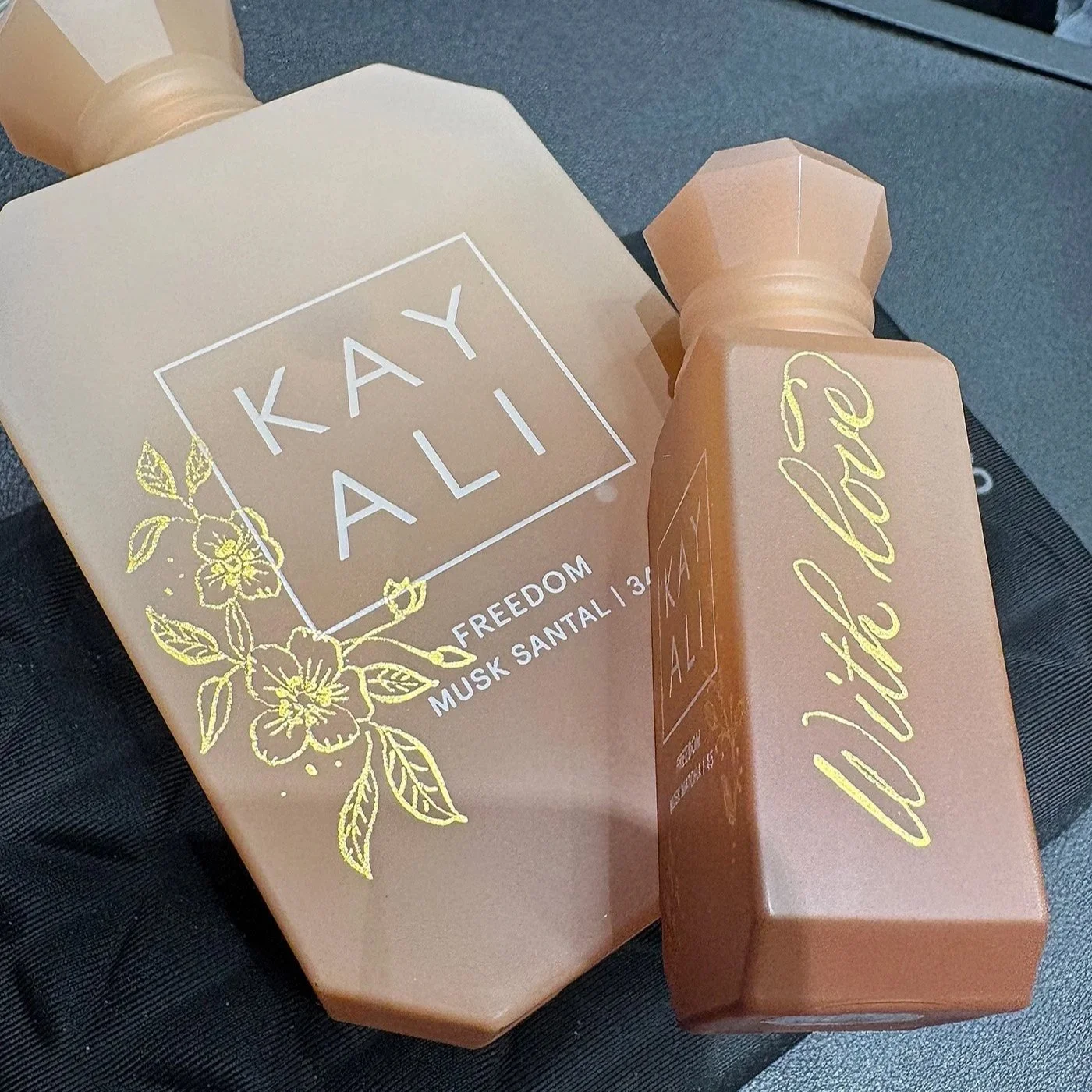
As a calligrapher, I specialise in calligraphy-style engraving — typically names, initials, important dates, or meaningful messages. The handwriting looks beautiful on its own, and it can be elevated further with elegant flourishes or other decorative details.
As a general guide, engraving a first name takes around five to ten minutes per item. That might sound quick, but it’s a detailed, multi-step process. Each piece is carefully cleaned, the layout is planned and drafted, the engraving is done by hand, and — where needed — colour is added before the final polish.
Longer messages or additional decorations naturally take more time. This isn’t just because of the number of letters, but because of the care required to compose everything beautifully. Engraving is permanent, and mistakes cannot be corrected. Spacing, centring, and balance all matter. A well-engraved piece should feel considered, not rushed.
Engraving at live events
For event planners, the more practical question is often about volume.
With a well-organised setup, I can typically engrave around 12 names per hour. When designs become more intricate — for example, adding flourishes or more detailed compositions — that number drops depending on the complexity of each request.
These figures are realistic, but they rely heavily on the conditions surrounding the engraving. This is where many of the biggest misconceptions arise.
What actually impacts timing?
Hand engraving doesn’t happen in isolation. At events, it sits within a live environment — and that environment has a significant influence on timing.
One of the most important (but often overlooked) factors is the setup itself. While engraving equipment is portable, that doesn’t mean it can be done efficiently just anywhere. Good lighting, sufficient working space, and a comfortable, stable setup all make a meaningful difference — not just to speed, but to safety. If the setup isn’t right, pauses become necessary, and those minutes quickly add up.
Then there’s the audience.
Live engraving naturally draws attention. People gather, watch, ask questions, and engage. That’s not a drawback — it’s actually the point. The theatre of seeing something created by hand is what makes the experience so memorable. However, it does mean that time is shared between the craft itself and interaction with guests.
There’s always a balance to strike between making guests feel seen and looked after, and maintaining a smooth flow throughout the event.
The items themselves also play a role. Does the engraving need to be perfectly centred, or can it be placed more freely? Is the surface curved, coated, or particularly delicate? All of these factors have an impact on the speed and complexity of the work.
A real event example:
Planning for high demand
A good example of how timing plays out in reality was an event I worked on for a major brand during a new store opening in York.
The event ran for six hours and attracted a large, enthusiastic crowd. High demand was anticipated from the outset, so the brand team and I planned accordingly. We agreed on a capacity of around 60 engravings for the day and carefully structured the ordering process.
This proved crucial — all available slots were filled within the first hour.
What made the event successful wasn’t speed alone, but structure. The brand team supported the process by organising payments (engraving was offered as a complimentary service with purchase), recording engraving requests, and placing a note inside each item.
Customers were asked to return at a specified time to collect their finished piece. This helped manage expectations and prevented long queues forming around the engraving station.
Because everything was clearly communicated and well organised, the experience remained smooth and enjoyable — even at full capacity. Towards the end of the day, we were even able to accept a small number of additional requests.
Good planning, rather than rushing, is what allowed hand engraving to truly shine at this busy event.
What could go wrong — and how to avoid it
If you’re commissioning engraving for the first time, there are a few common pitfalls to be aware of. A little planning can make the difference between a stressful setup and a seamless guest experience.
Overestimating how many items can be engraved during the event
Hand engraving is, by nature, slower than machine engraving — but that’s also where its value lies. Guests are not just receiving a personalised item; they are watching something being created by hand.
When planning your event, estimate the number of expected visitors and how many items can realistically be personalised during the available time. If it’s important that every guest receives a personalised piece, there are several ways to plan for this.
Some items can be engraved in advance in the studio and presented during the event. Alternatively, you could consider booking a second engraving artist.
Offering engraving to every single guest is not always necessary. A first-come basis can create anticipation and excitement around the experience, particularly when communicated clearly.
Allowing completely open-ended requests
Allowing guests to request absolutely anything may sound appealing, but in practice it can slow the process significantly and create inconsistencies in the experience.
Setting simple guidelines — for example limiting engraving to names or initials during busy periods — keeps the process fair and ensures more guests can enjoy the experience.
Clear expectations make the entire activation smoother for both guests and organisers.
Crowding around the engraving station
Guests are naturally drawn to live engraving. They watch, film, ask questions, and engage with the process. That excitement is one of the reasons live personalisation is so effective.
However, without some level of crowd management, guests naturally gather very close to the workstation. Leaning over the artist, pushing against the work surface, or touching equipment can create safety risks.
Keeping people at a sensible distance is important. When planning the event, consider the flow of people and avoid positioning the workstation in areas with very high footfall or where guests can approach from behind the artist. Having someone available to help manage the space during the event keeps everything running smoothly — and safely.
Unusual items or surfaces
Personalised gifting is so creative! From perfume or alcohol bottles to candle jars, key rings, lipsticks, lighters, water bottles or makeup brushes — many different objects can be engraved.
However, every material behaves differently under the burr. Surfaces may be coated, curved, or particularly delicate, which can affect both the technique and the time required.
Sending a sample item for testing ahead of the event allows the engraving artist to experiment and prepare the most suitable tools and approach.
Product handling
Products often need to be unpacked and repacked before and after engraving. It’s a small detail that is easy to overlook, but when working with higher volumes it can quickly add up.
An extra pair of hands during busy periods — or preparing some items in advance — can significantly improve the flow of the experience.
Designing the best personalisation experience
The most successful events are those where engraving is thoughtfully integrated into the overall experience.
A few key decisions can make a meaningful difference: planning realistic capacity, providing support staff to manage guest flow, and creating a clear system for ordering and collection all contribute to a seamless execution.
For particularly busy or time-limited events, pre-engraving a selection of items can ensure every guest still receives something personalised, without placing pressure on the live element.
…
Final thoughts
Hand engraving is about far more than the finished personalised item. It’s a moment of interaction, a point of connection, and often one of the most memorable elements of an event.
The time it takes is not a limitation — it’s what creates anticipation, engagement, and a sense of value.
Every event comes with its own expectations and challenges. With thoughtful planning, hand engraving becomes more than just personalisation — it becomes an experience your guests will remember long after the event itself.
If you’re planning an event and considering live engraving, feel free to get in touch — I’m always happy to help you create a seamless and memorable experience for your guests.
More engraving & personalisation

Considering live personalisation for your next brand activation or corporate event? From mapping out space and guest flow to budgeting and choosing between calligraphy, engraving, or hot foiling, these 10 essential questions will help you plan a seamless experience your guests won't stop talking about.