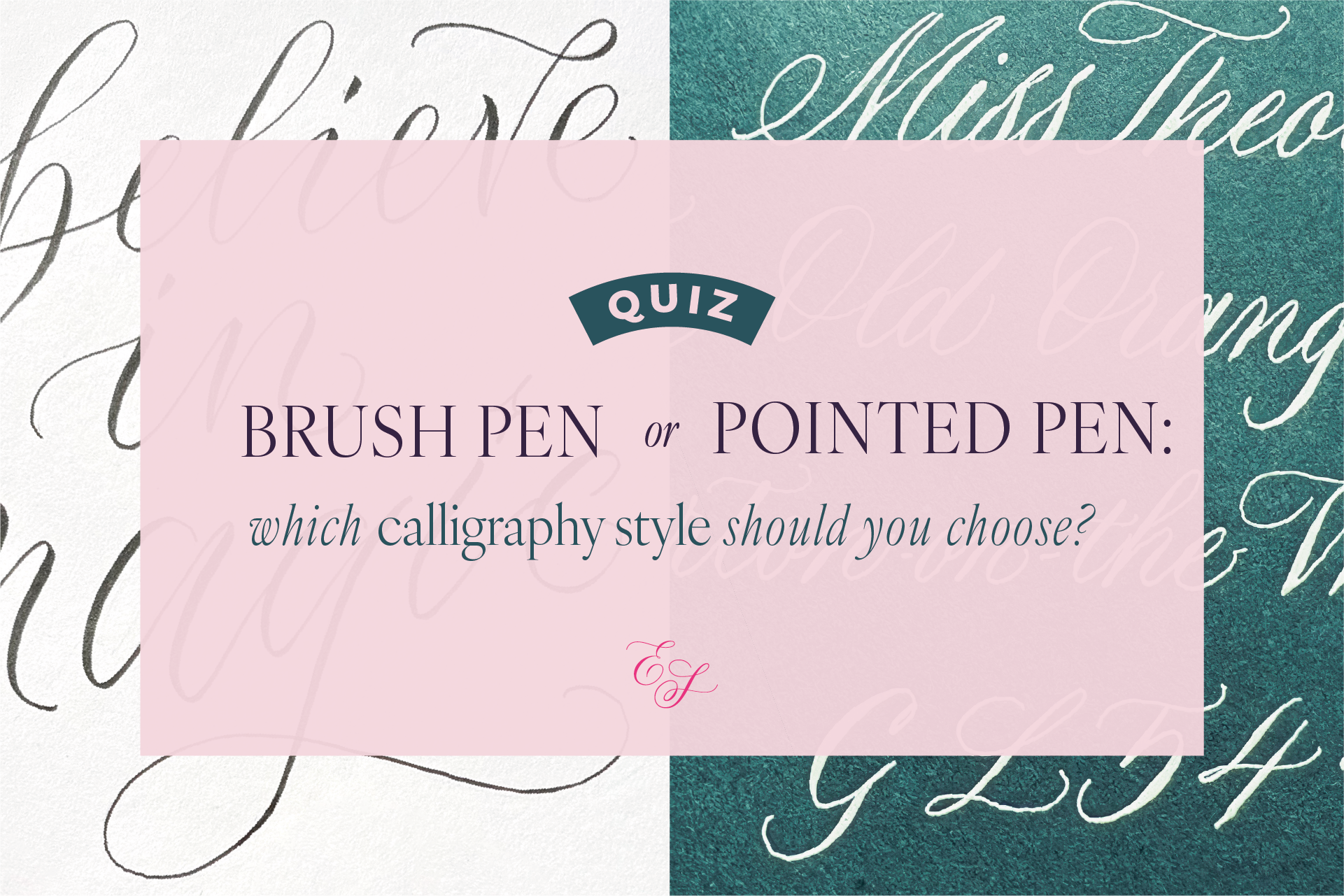
Brush pen or Pointed pen calligraphy: which one should you choose?
One of the most common questions I get from students is, "Where do I start?" You find yourself at a crossroads: down one path is the modern, energetic world of Brush Pen Calligraphy, and down the other is the elegant world of Pointed Pen (Dip Pen) Calligraphy.
The truth? There is no wrong answer. However, your lifestyle, your available time, and the "vibe" you are chasing will make one of them a better fit for you right now.
Here is a breakdown of the differences, based on my years of writing and teaching, to help you decide.
The "vibe" check: what’s your style?
While both tools can produce beautiful lettering, the feeling of the final piece—and the experience of creating it—is distinct.
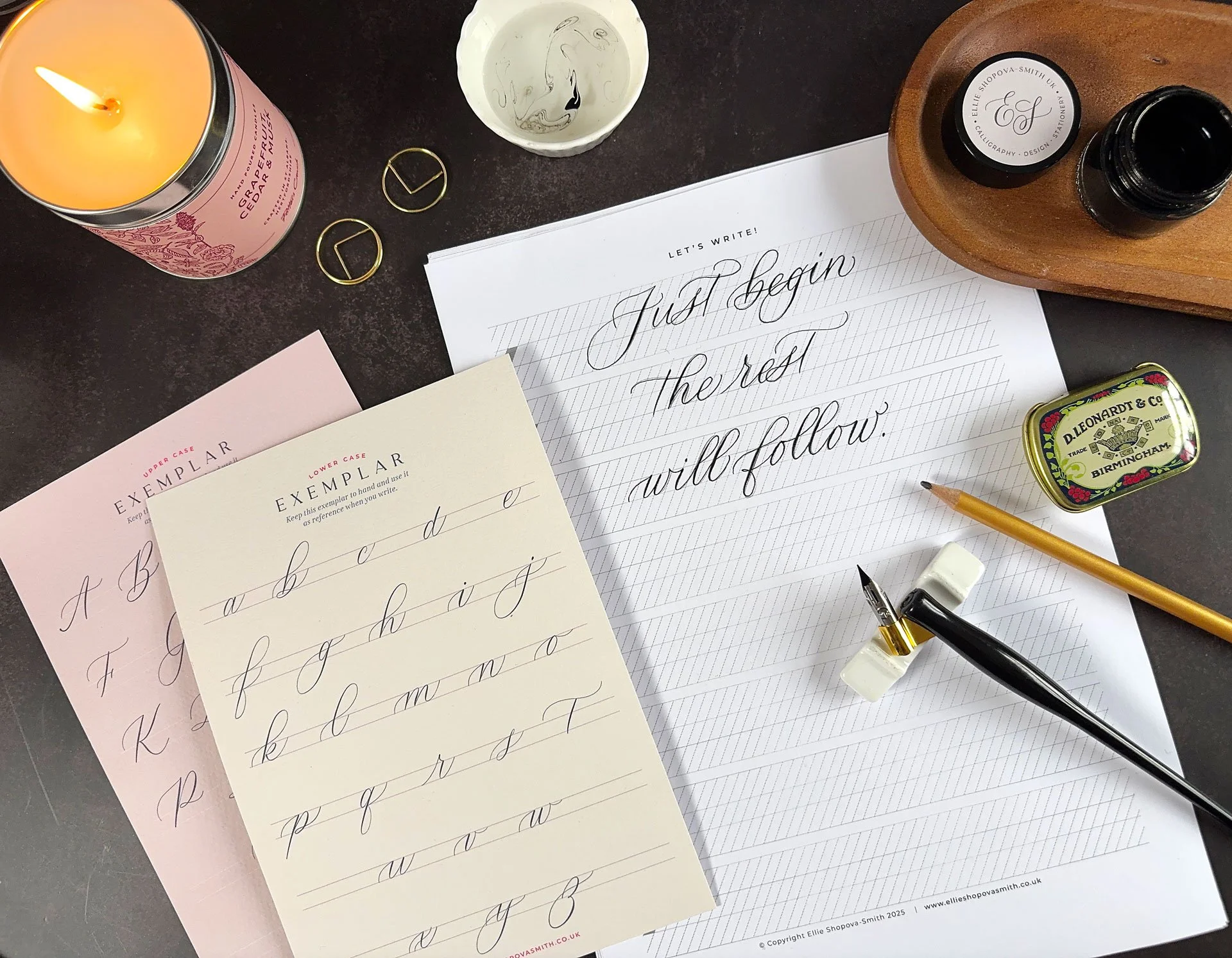
Pointed Pen (Dip Pen): This tool creates a delicate, polished line. Even if you are writing a fun, modern style, the metal nib produces a sharpness that feels refined. Setting up your workspace with ink jars and nibs feels like a ritual. It forces you to slow down, be intentional, and disconnect from the rush of the day.
Brush Pen: This is the energetic cousin. The writing is slightly "chunkier" and full of life. It can look formal and controlled, but it excels at being expressive. It’s the "grab-n-go" option for the creative soul who wants to write now.
The reality check: my "new mum" beginner story
I actually started my journey with Brush Pens, and looking back, I wouldn't change a thing.
Why? Because at the time, I was a new mum. My routine was unpredictable, and I didn't have 15 minutes to set up inks, clean nibs, or wait for paper to dry. I needed a tool I could uncap, practice with for five minutes while the baby slept, and put away instantly.
If your life is currently chaotic or you are short on time, the brush pen is a forgiving friend!
The learning curve
If you want the quickest path to writing pretty letters, Brush Pens are generally faster to learn. The grip is familiar (it feels like a normal pen), so you can focus immediately on learning the letterforms.
Pointed Pen has a steeper learning curve because there is more "tech" to understand. You have to learn:
How to insert the nib into the holder.
How to prep the nib so it holds ink.
Which paper prevents bleeding.
How to control the ink flow.
However, here is the good news: The muscle memory is 100% transferable. I found that when I eventually moved from brush pens to Copperplate (a classic pointed pen style), I wasn't starting from scratch. I was just building on the skills I already had.
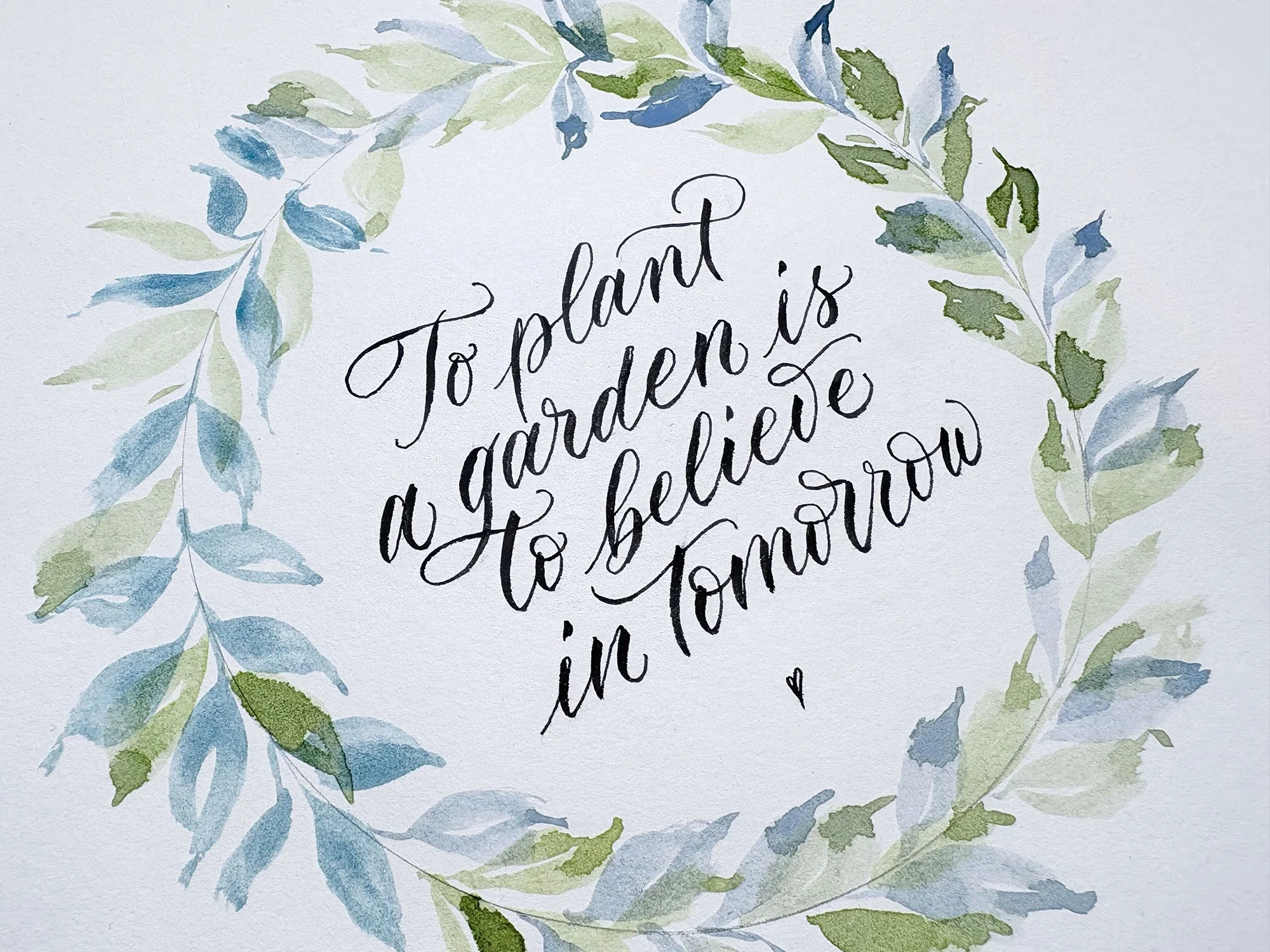
A modern calligraphy quote written with a brush pen.
CASE STUDIES:
When the tool matters
Sometimes, the choice isn't about preference—it's about the project.
1. The Fabric Commission
I once had a commission to write directly on fabric. Straight away, I knew a dip pen was a non-starter; the sharp nib would snag on the fibers and the ink would bleed. I used a large brush pen (and some faux calligraphy techniques) to get the job done. The flexibility of the brush allowed me to write large, bold letters that the dip pen simply couldn't handle.
2. The Bleeding Paper
I was personalizing a print for a client and realized the paper quality wasn't handling the dip pen ink well—it was bleeding everywhere. I switched to a brush pen, managed to mimic the Copperplate style, and saved the project without the ink disaster.
The Kit & The Cost
Don't let the idea of "fancy equipment" scare you off either method. Surprisingly, the cost to start is very similar for both—roughly £20.
The Brush Pen Kit:
Tools: Just the pen and paper.
Pros: Highly portable. You can practice on your lunch break, on a train, or on holiday.
Cons: Markers run out of ink faster than a bottle will.
Cost: Small brush pens are a few pounds; large ones are £3-4.
The Pointed Pen Kit:
Tools: Pen holder, nib, ink bottle, cleaning cloth, high-quality paper.
Pros: A £1 nib and a bottle of Walnut or Sumi ink can last for months and months.
Cons: Not very portable. You need a flat table and a "safe zone" for open ink bottles!
Cost: The initial list is longer, but the materials last a long time.
(Check out my blog posts for a full breakdown of the materials you need for brush pen calligraphy and for pointed pen calligraphy.)
A note for lefties
If you are left-handed, you might find Brush Pen calligraphy easier to start with. Most brush pen ink dries almost instantly, meaning there is less chance of your hand smudging your beautiful work as you move across the page. (Read about calligraphy for lefties here.)
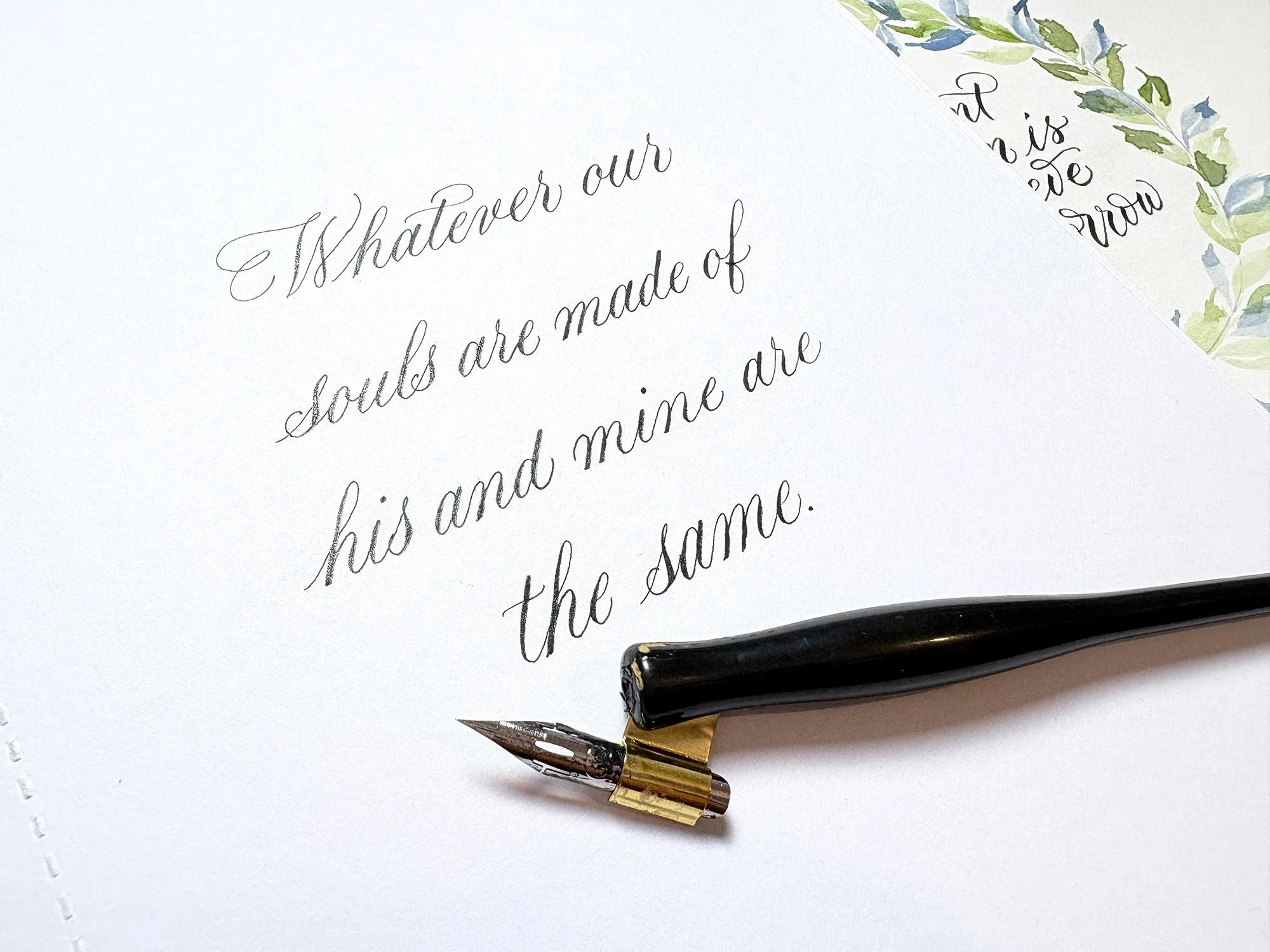
A classic style for this Wuthering Heights quote – written with a pointed pen.
The final verdict
If you were to ask me which tool I would take to a desert island, I honestly couldn't choose. I love them both for different reasons.
Choose Brush Pen if:
You are short on time and need a "low prep" hobby.
You want to write energetic, expressive, or large-scale pieces.
You need portability – to practice on holiday or during your lunch hour.
Choose Pointed Pen if:
You crave a relaxing ritual to de-stress.
You love the "period drama" aesthetic (..picking up the dip pen makes me feel like a heroine in a novel).
You want that ultra-fine, polished, delicate look.
Ready to start?
Whether you choose the convenience of the brush or the elegance of the nib, I can help you get started.
Join a Workshop: You can try both styles in one of my upcoming calligraphy workshops (all materials supplied!).
Start at Home: Browse the shop section for beginner worksheets designed for both brush and pointed pen.
QUIZ:
Brush Pen or Pointed Pen: Which one to choose?
Take this 2 minute quiz and find out!