
What are the different types of calligraphy?
Calligraphy is a collection of distinct styles, each created by a specific tool and technique. From the bold, structured letters made with a broad nib pen to the elegant, flowing strokes of a pointed dip pen, and the expressive marks of a brush pen, each type of calligraphy has its own unique character, difficulty level, and purpose.
If you are new to calligraphy understanding the relationship between calligraphy tools and calligraphy styles is the key to choosing the right starting point. The tool you use determines the strokes you can create, the styles you can learn, and ultimately how enjoyable your learning experience will be. And if you have some experience already, learning about other tools can open new scopes of creative exploration.
In this guide I’ll review the main types of calligraphy you can produce with different tools. I will focus on Western style calligraphy as I have limited knowledge of Chinese or Arabic calligraphy.
The main types of calligraphy based on the tools used
All Western calligraphy can be grouped into three main categories based on the tool used to create it: broad nib calligraphy, pointed pen calligraphy, and brush calligraphy. Each tool produces different kinds of strokes, which in turn define the styles you can create.
Understanding these main categories is the most important step for beginners, because the tool — not just the letterform — determines the appearance and learning process of each style.
1. Broad Nib Calligraphy
Broad nib calligraphy is created using a pen with a flat, wide tip. Unlike flexible pens, the nib does not flex under pressure. Instead, the thick and thin strokes are created by controlling the angle that the nib moves onto the writing surface.
This means the size of the nib itself determines the stroke variation.
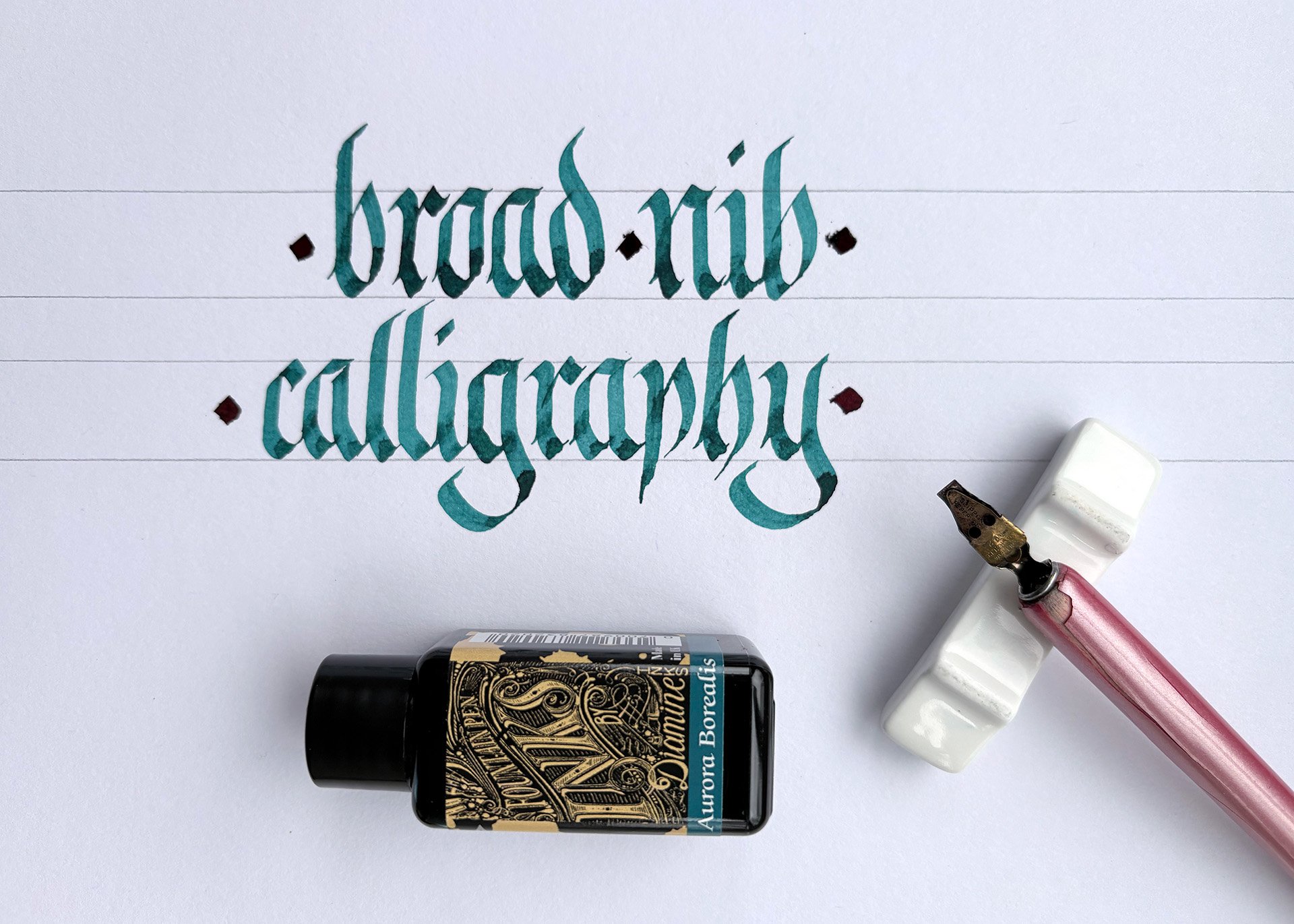
Broad nib calligraphy styles have strong architectural appearance.
How it works
Drawing a stroke in the direction of the narrow edge of the nib creates a thin line; drawing a stroke with the full width of the nib creates a thick line. The contrast (the difference between the thin and thick lines in a script) comes from the angle of the pen, not pressure.
This gives broad nib calligraphy its distinctive structured and architectural appearance.
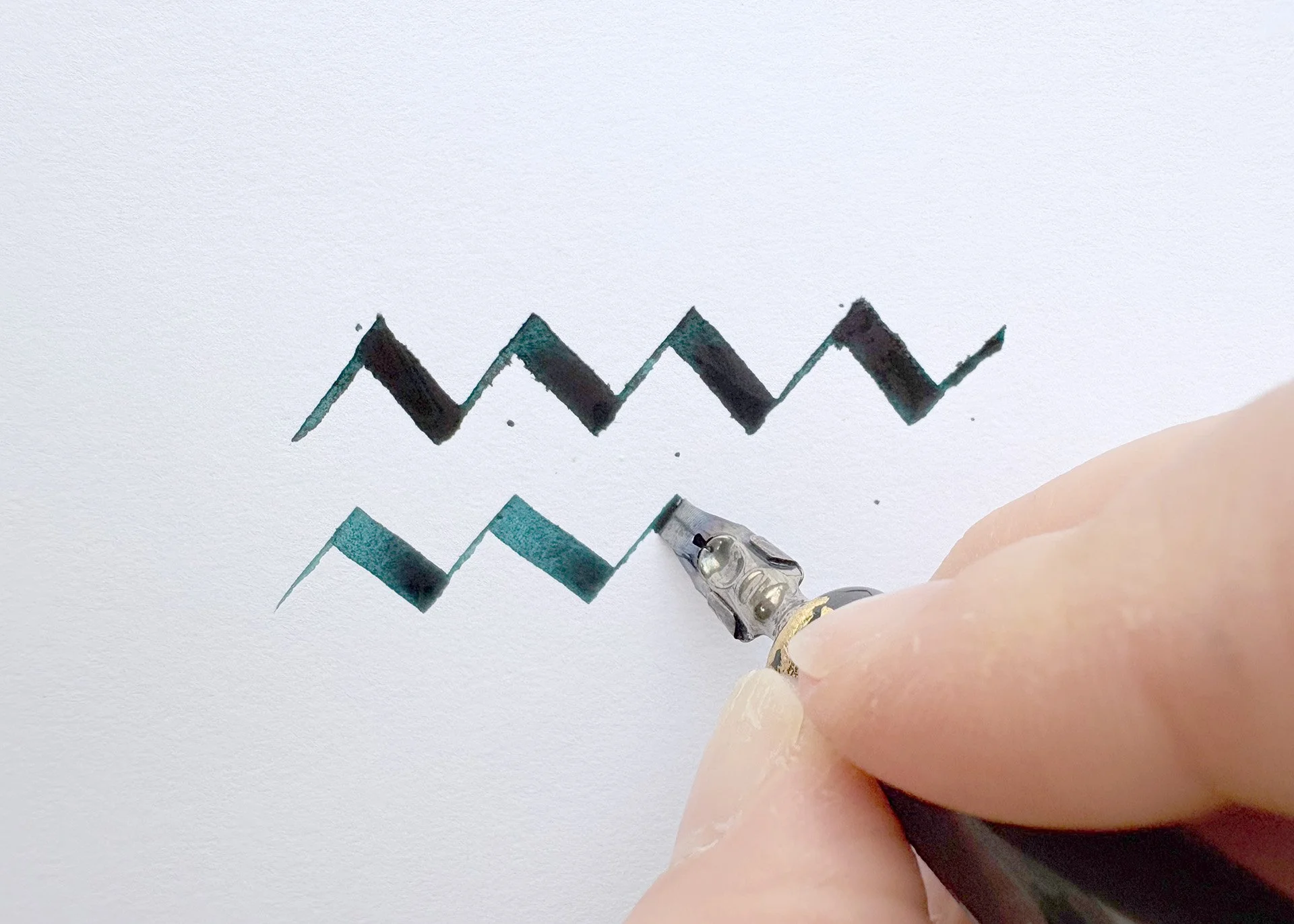
Writing a thin line with a broad nib
The thin line is written using the narrow edge of the nib.
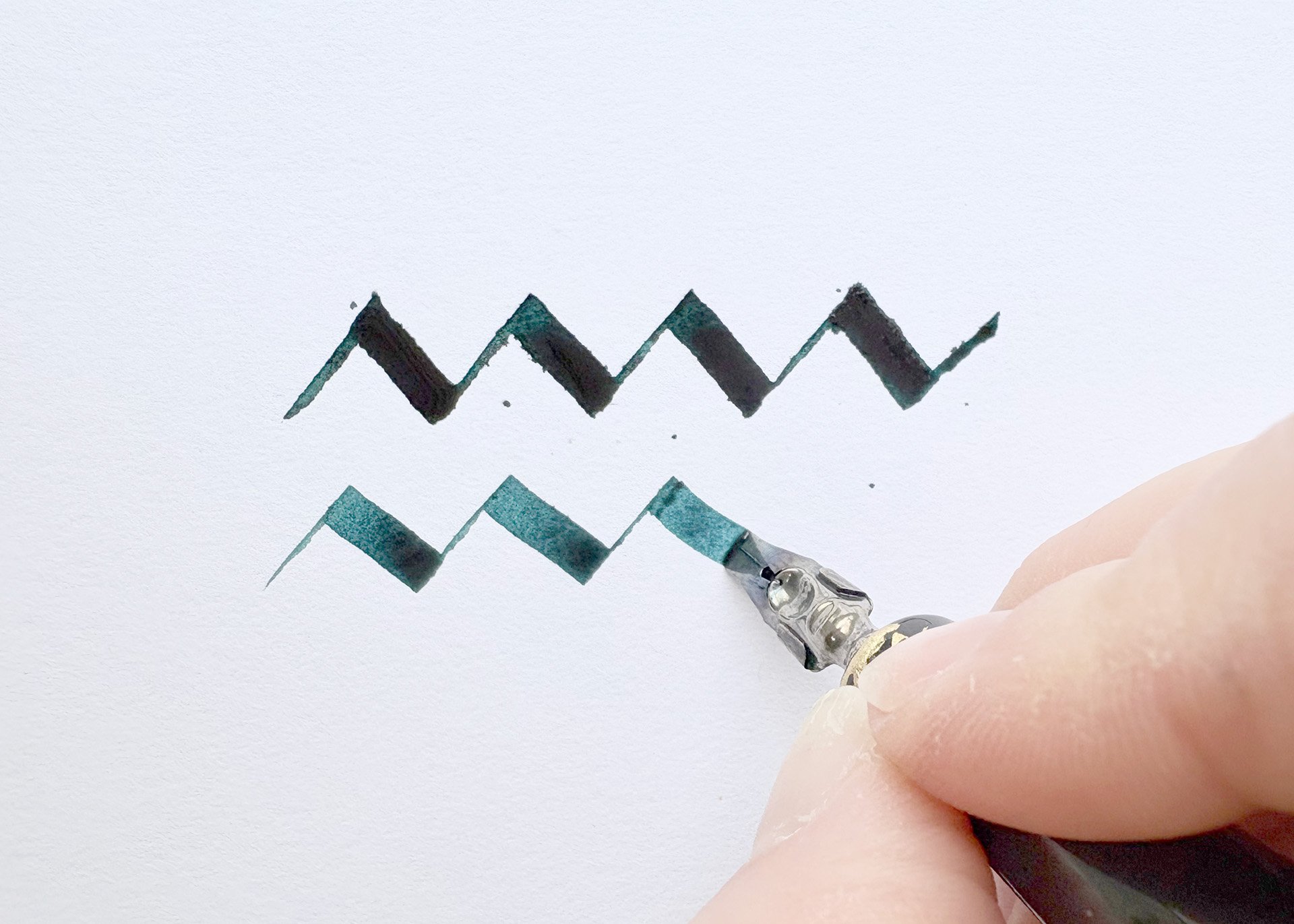
…and a thick line
The thick line is produced using the full width of the broad nib.
Characteristics of broad nib calligraphy
Consistent stroke contrast
Strong geometric structure
Common broad nib calligraphy styles
Italic calligraphy – elegant, simple, legible
Gothic calligraphy – bold and dramatic
Uncial script – rounded and beginner-friendly
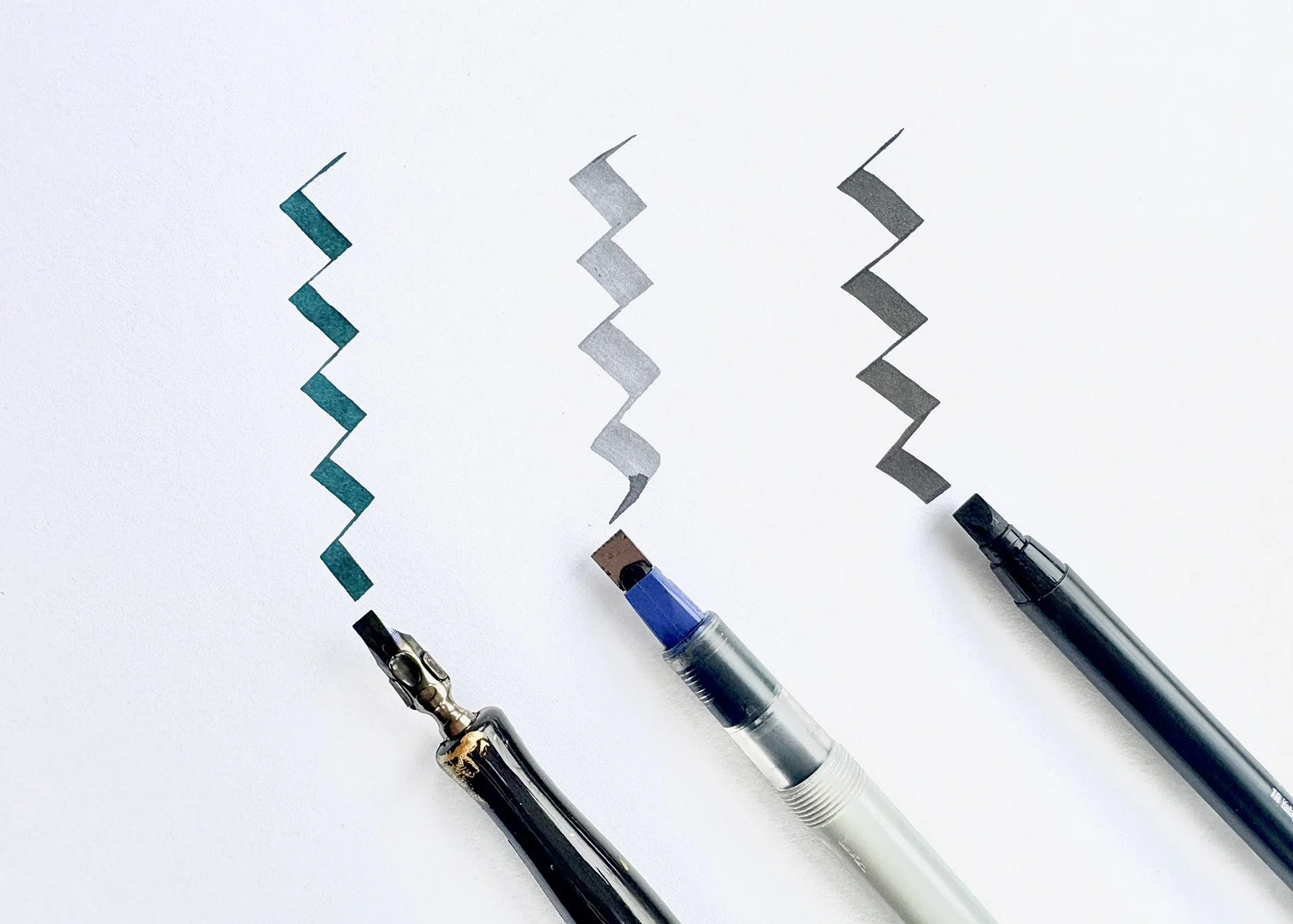
From left to write: a broad nib pen, a Pilot parallel pen and a chisel-tip marker all produce thick and thin lines in a similar way.
Tools for broad nib calligraphy
Dip pen with broad nib
Pilot Parallel Pen
Chisel-tip marker
Beginner difficulty level: ★★☆☆☆ (Recommended for beginners)
Broad nib calligraphy may be easier for beginners than pointed pen calligraphy because it does not require pressure control. The strokes are more predictable, making it an excellent foundation for learning calligraphy.
2. Pointed Pen Calligraphy
Pointed pen calligraphy is created using a flexible, sharp-tipped nib that spreads apart when pressure is applied. This flexibility allows the pen to create subtle contrast between thin and thick strokes.
Unlike broad nib calligraphy, stroke variation comes from changing the pressure applied during writing, not the angle.
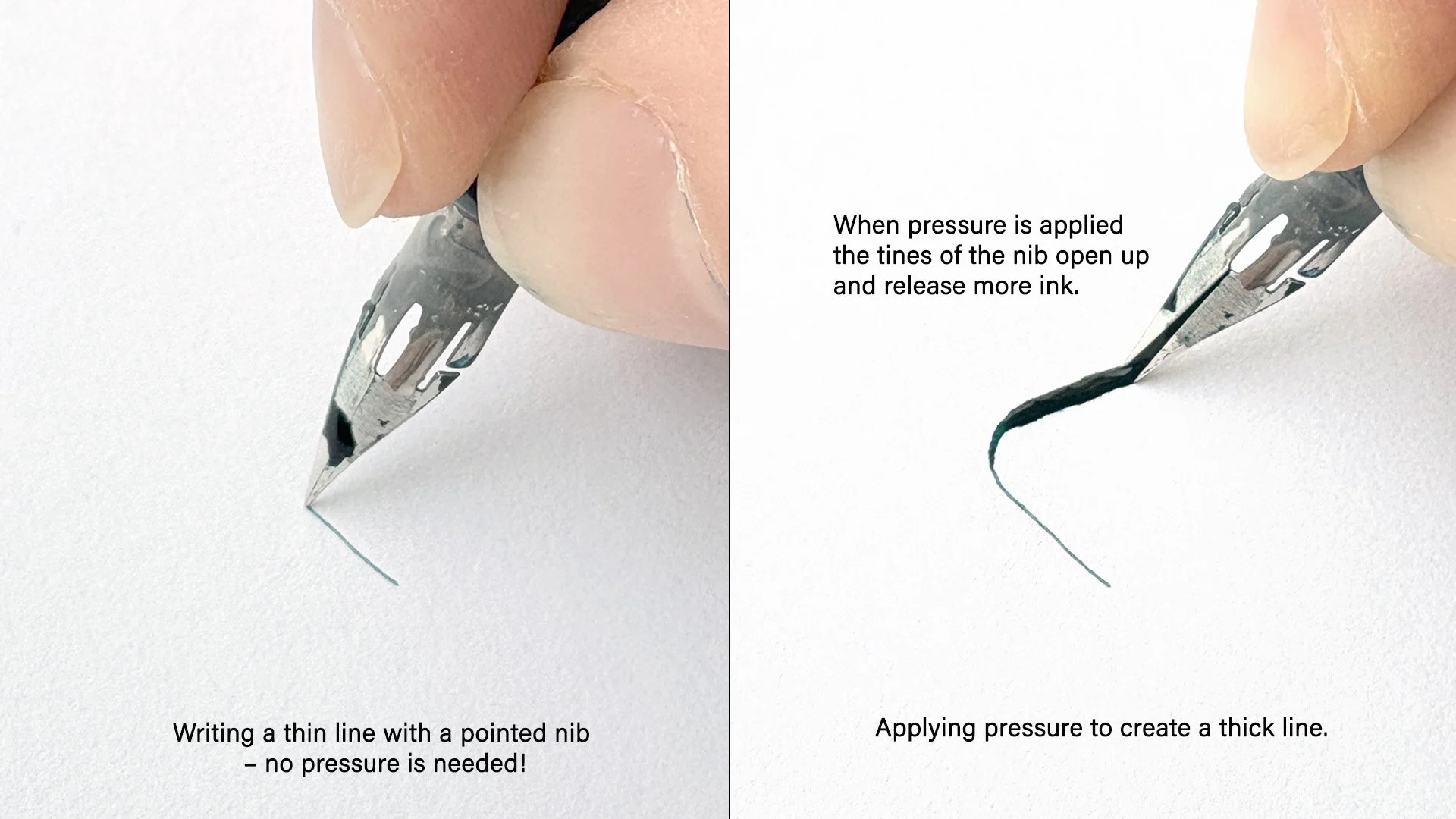
Creating thin and thick lines with a pointed nib – through pressure.
How the pointed nib works
When you write with no pressure, the tip of the nib produces a very thin line. When you apply pressure, the tines of the nip spread out, allowing more ink to reach the paper and produce a thicker line.
This technique requires more control and coordination as you are aiming to balance letterforms and pressure control.
Characteristics of pointed pen calligraphy
Extremely thin hairlines
Thick downstrokes created by pressure
Smooth, flowing curves
Elegant and refined appearance, either traditional or modern
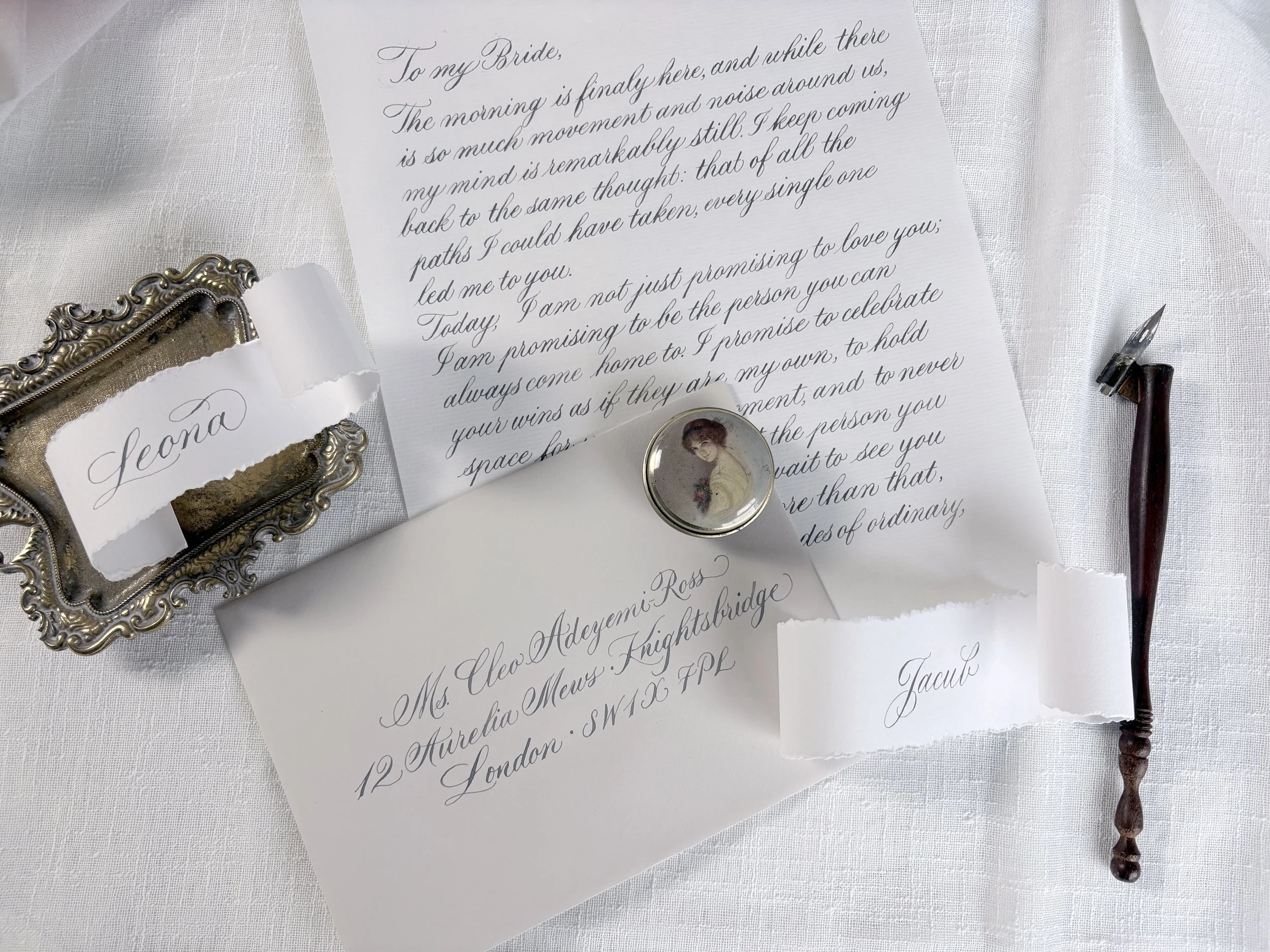
Examples of Copperplate calligraphy written with a pointed pen.
Common pointed pen calligraphy styles
Copperplate calligraphy – formal and highly structured
Spencerian script – lighter, faster, and more delicate
Modern calligraphy – more relaxed and expressive
Pointed pen calligraphy tools
Flexible pointed nib with a dip pen holder (straight or oblique)
Fountain pen *(to some degree)
Discover the tools you need for pointed pen calligraphy in this article.
Beginner difficulty level: ★★★★☆ (More challenging for beginners)
Pointed pen calligraphy requires careful pressure control and coordination. Many beginners find it more difficult at first, but it allows for some of the most elegant and expressive styles.
3. Brush Calligraphy
Brush calligraphy uses a flexible brush tip to create stroke contrast through pressure. This can be done with brush pens or traditional paintbrushes.
Brush calligraphy is one of the most popular entry points for beginners because the tools are accessible, forgiving and fun.
How it works
When you press down, the brush spreads and creates a thick stroke. When you use light pressure, the brush creates a thin stroke. The contrast between thick and thin strokes can be very striking and expressive.
Brushes allow for more freedom and stroke variation than metal nibs.
Characteristics of brush calligraphy
Highly expressive strokes
Smooth transitions between thick and thin lines
Ideal for modern styles
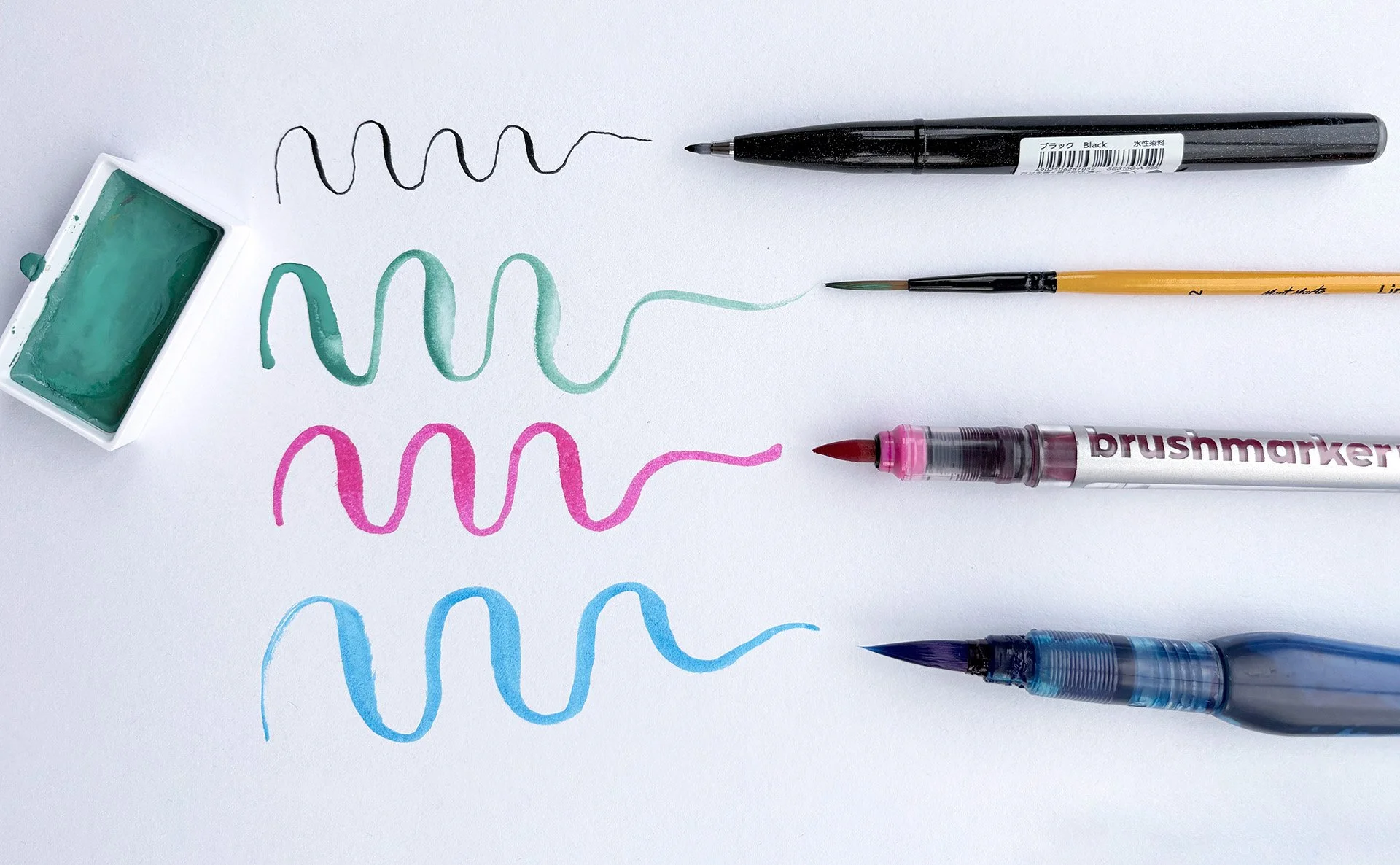
From top to bottom: small brush pen, round brush, large brush pen and a bristle-brush marker.
Brush calligraphy tools
Small brush pen
Large brush pen
Traditional paintbrush
Bristle brush marker
Discover the tools you need for brush pen calligraphy in this article.
Brush pen or pointed pen? Discover which one to choose in this article.
Beginner difficulty level: ★★☆☆☆ (Highly recommended for beginners)
Brush pens are widely available and really fun to experiment with. They are an excellent starting point for learning pressure control.
4. Monoline Calligraphy
Calligraphy can be written with no stroke variation too. This can be done with everyday tools like a biro, marker pen or even a pencil, i.e. tools that can only produce consistent thickness of the line. You could argue that this is closer to hand lettering or even handwriting but for a comprehensive review of writing tools I am including it here.
How it works
Since the tools don’t produce line variation, the focus is on writing beautiful letterforms or mimicking the thick and thins (as in faux calligraphy style).
Characteristics of monoline calligraphy
No stroke variation
Accessible tools
Very easy to learn
Can be written on variety of surfaces
Calligraphy styles for monoline pens
Faux Calligraphy
Penmanship
Monoline calligraphy tools
Biros and everyday pens
Marker pens (yes, your kids’ Crayola too!)
Pencils
___
Summary: the tool determines the style
Each calligraphy tool creates its own unique visual language: broad nib pens produce structured yet dramatic styles, pointed pens create elegant scripts like Copperplate calligraphy and brush pens allow for expressive modern lettering. Understanding the differences between the tools will help you identify the right tool for each style and make learning easier, more enjoyable and fun.
Related posts





Ever looked at your calligraphy and felt something wasn’t quite right, but couldn’t spot the mistake? You aren't alone. Discover the 3 simple wins that will instantly transform your writing and give your calligraphy that polished, professional look.