
Can I learn calligraphy if I have bad handwriting?
For several years I have been teaching calligraphy workshops and I often hear the same misconception. It is one of the main barriers to learning calligraphy — the misconception that calligraphy is a difficult skill that only “gifted people” with beautiful handwriting can learn.
The assumption makes sense—neat, attractive handwriting may imply a natural ability for calligraphy. Yet there are some major differences between these two forms of writing. Understanding these differences can open up a world of creative possibilities — and maybe even inspire you to pick up a pen and try calligraphy yourself.
What is Handwriting?
Handwriting is the unique way each person expresses thoughts on paper. It’s a personal, functional skill we learn early in life, used to jot down notes, write letters, or create lists. Whether in block letters or cursive, handwriting varies widely from person to person, much like a fingerprint.
Your handwriting reflects your personality and life experience, and it’s primarily about communication rather than artistic expression. While some may have neat, flowing handwriting, others might describe their own writing as “messy”— but all handwriting is valid and serves an important role in daily life.
What is Calligraphy?
Calligraphy, on the other hand, is the art of beautiful writing. It’s a deliberate, mindful process where each stroke is carefully crafted using specialised tools like dip pens, brush pens, or broad nibs.
Unlike handwriting which is unique to each person, there are several key calligraphy styles — such as the elegant Spencerian and Copperplate styles, the dramatic Gothic scripts and the expressive modern brush calligraphy styles. Calligraphers often practice these different styles (or ‘hands’) for years and focus on constructing each letter with control.
Calligraphy evolved from a distant time when paper was precious and the skill of reading and writing was only available to a privileged few. Today writing is a universal skill yet calligraphy is still regarded as something elevated and distinctive. Calligraphy is often used for special occasions and creative projects such as wedding invitations, personalised gifts, event stationery, branding, and more.
Key Differences Between Handwriting and Calligraphy
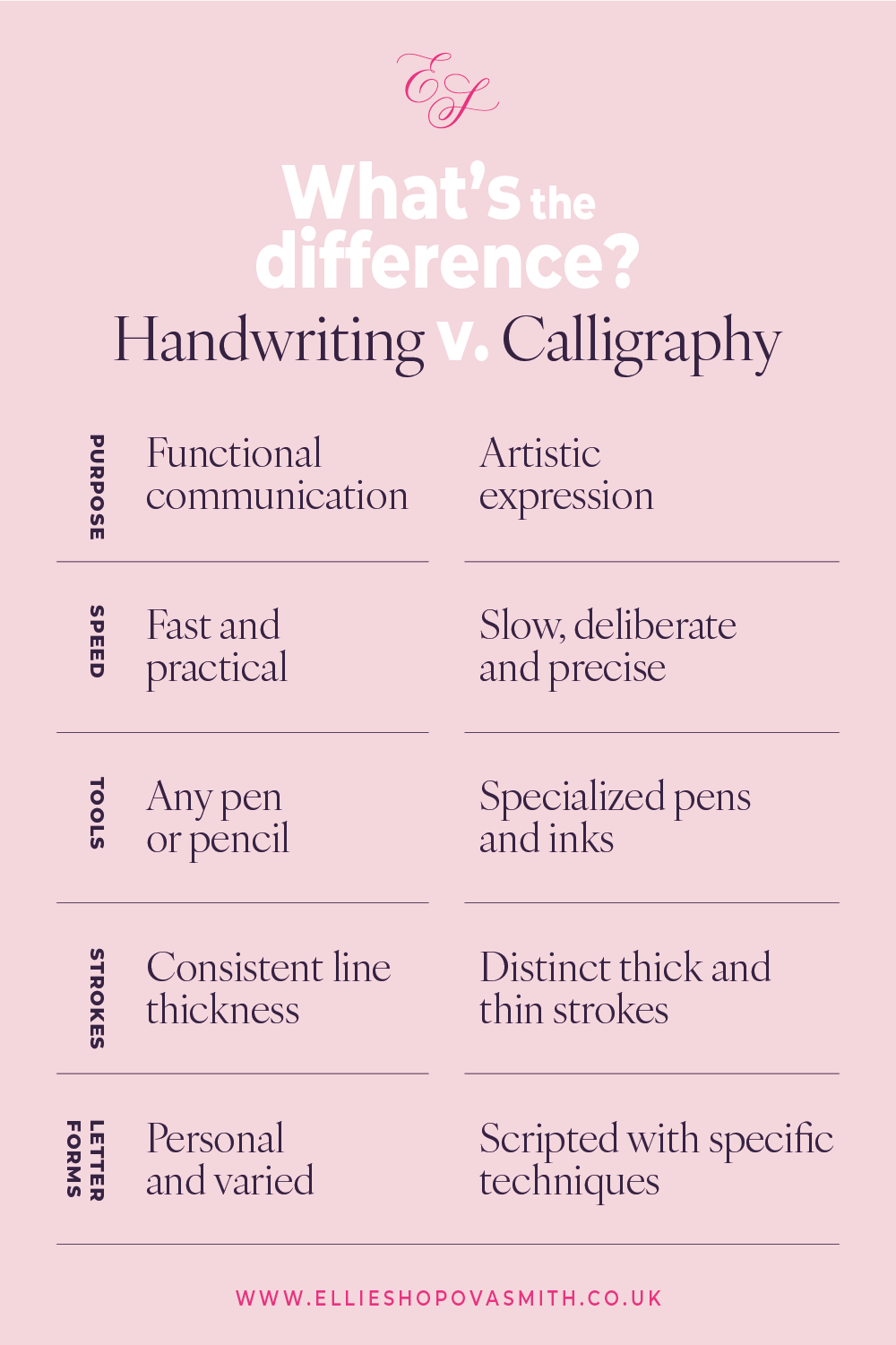
Handwriting and calligraphy may look similar, but they serve very different purposes. Handwriting is used for everyday communication. It is usually quick and practical, using any pen or pencil. The letterforms are personal, with consistent line thickness and a straight baseline.
Calligraphy is more intentional. It is slow, precise, and focused on artistic expression. It uses specialised tools like dip pens or brush pens. The strokes vary between thick and thin, and each letter follows specific techniques.
Can I learn calligraphy if I have bad handwriting?
I completely relate to this question — my own handwriting is a peculiar mix of cursive and block letters that look slightly different every time I write. Commitment and imagination are needed to decipher my shopping lists and birthday card messages. Yet, my inconsistent handwriting was never an issue when I started learning calligraphy.
The truth is, calligraphy is a skill separate from your everyday handwriting. It’s about learning techniques and practicing with patience, rather than having “perfect” handwriting from the start. I believe that anyone can learn calligraphy — regardless of their handwriting – as long as they are prepared to put in the practice. The real question that will determine successfully learning calligraphy is not “Is my handwriting good enough?” but “Am I willing to practice regularly?”
Benefits of Learning Calligraphy
Practicing calligraphy may improve your handwriting over time, as it develops fine motor skills and an eye for letter shapes. But the benefits don’t stop there.
It can also be a wonderfully mindful and stress-relieving activity. It encourages slowing down, focusing on form, and expressing creativity. It allows you to create beautiful, personalised projects — from gifts to home décor.
How to Get Started
If you’re ready to give calligraphy a try, now is a great time. There are a lot of helpful resources available for beginners, so whatever your learning style is you can find a method that you enjoy.
Calligraphy workshops from an experienced calligrapher – in person or online – are the ideal way to get started. Your tutor will guide you through the basic strokes, how to hold the pen correctly, advise on the best calligraphy tools for beginners and answer any specific questions you may have.
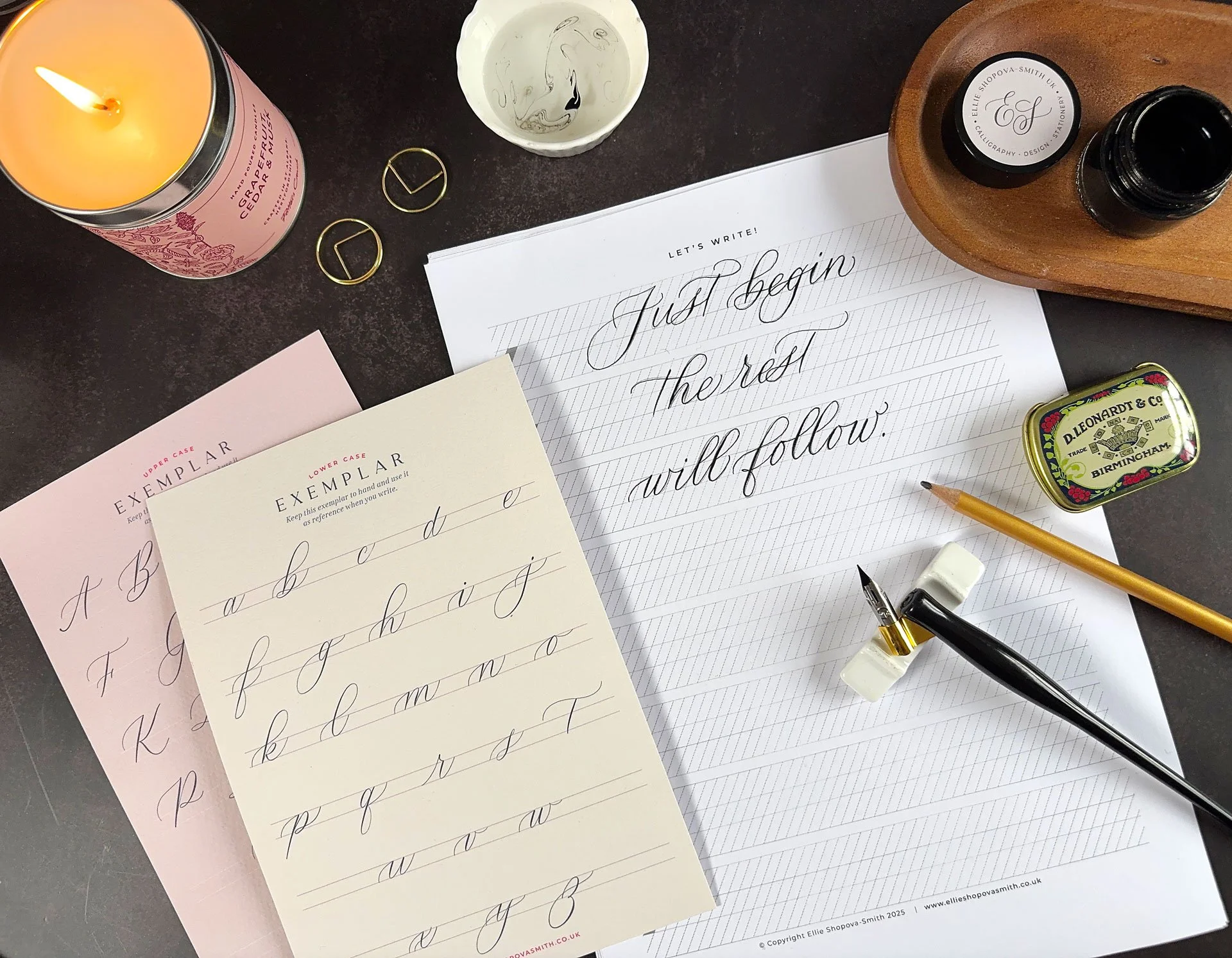
Calligraphy worksheets and practice books are another great way to learn. Learning calligraphy requires a lot of repetitive practice aimed at building muscle memory. Worksheets are perfect as they provide guided practice on letterforms and strokes, helping you build confidence step-by-step. You can check out my own selection of calligraphy worksheets for beginners or search on Etsy for different styles.
You might also enjoy checking out my posts on Can Calligraphy Be Self-Taught? and Learn Calligraphy: A Beginner’s Guide to deepen your understanding.
Conclusion
While handwriting and calligraphy both involve putting pen to paper, they serve very different purposes. Handwriting is our everyday tool for communication, uniquely personal and practical. Calligraphy is an art form, saved for special moments. It is written with intention and gives a beautiful form to our thoughts.
With practice and guidance, the skill of beautiful letter-making is one that anyone can learn, regardless of their handwriting. So why not pick up a pen today and explore the world of calligraphy? Your handwriting doesn’t have to be perfect — all you need is curiosity and a little patience. Happy lettering!
More about learning calligraphy






Ever looked at your calligraphy and felt something wasn’t quite right, but couldn’t spot the mistake? You aren't alone. Discover the 3 simple wins that will instantly transform your writing and give your calligraphy that polished, professional look.